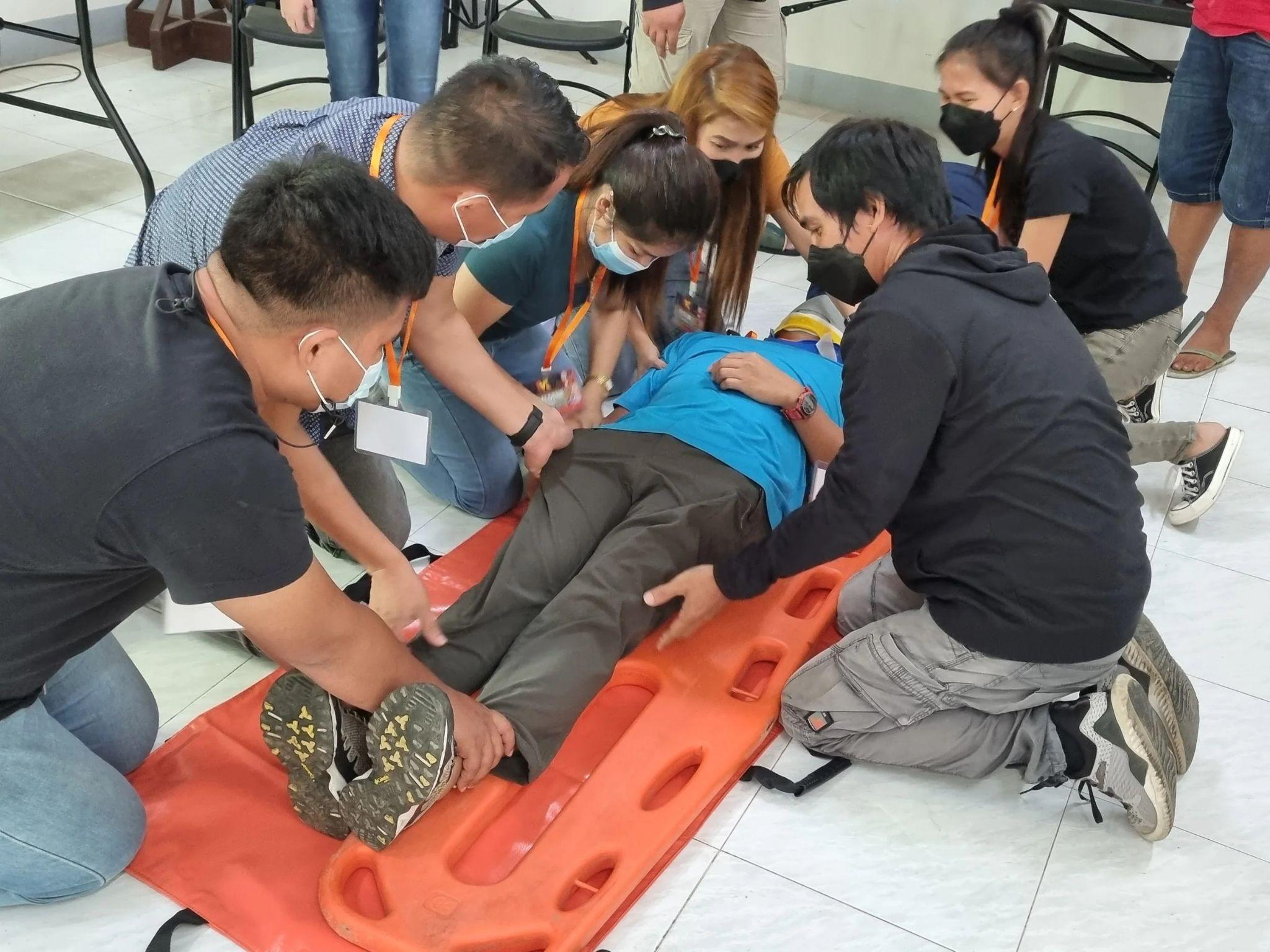
Filipino professionals (principally in nursing, medical technicians and other allied health professions) have been immigrating to and working in the USA medical profession for several decades. While traditional routes like medical technological and nursing roles exist, the profession of Emergency Medical Technicians (EMTs) has become popular with many Filipino nursing and paramedical professionals and their family members wanting to enter the USA market.
When considering whether a career in the US in the field of Emergency Medical Services (EMS) is something that either a prospective Filipino applicant should consider or for teachers or workforce planners to advocate, there are a few key factors that must be considered: the immigration/visa situation; the reciprocity of US accreditation; and the salary prospects. It is thus strongly advised to read the current demand list on emtjobs.org; and in particular also the detailed information about local wages throughout the states as found in the report at EMT salary, to ensure that this career path is one that will meet your long-term professional and financial aspirations.
Immigration and Work Authorization Realities for Filipino Applicants
Finally, for the purpose of becoming licensed in the United States, Filipino medical care workers will need to know the differences in how Emergency Medical Technicians and Registered Nurses are viewed in American immigration law.
- There is currently no Schedule A Visa Sponsorship for EMTs and Paramedics: Whereas other healthcare professionals like Registered Nurses and Physical Therapists qualify for employment-based immigration via the United States Department of Labor Schedule A shortage occupation list, which gives employers a direct path to apply for an employment-based Green Card (EB-3), there is no such shortcut available for EMTs and Paramedics due to an absence of a streamlined federal government visa programme. EMT-Basic level training, which typically takes a minimum of a two-year college education to pursue, does not usually satisfy the higher educational degree requirements necessary to qualify for an H-1B ‘Specialty Occupations’ visa.
- Legal Ways of Working in the USA: As a result, Filipinos who are in the emergency medical technician profession in America usually work as family based immigration petitions/spouse visa/holding a Green Card or on an F-1 student visa with Curricular Practical Training or Optional Practical Training whilst undertaking an accredited EMT course in the USA.
- As an ideal strategic plan, EMT certification will serve as a ‘bridge’ to U.S. RN Licensure for Filipino BSN nursing graduates who are either applying to NCLEX-RN or are waiting for their visa retrogression processing.
Credentialing and NREMT Certification Requirements
It should also be noted that foreign healthcare credentials, such as the Bachelor of Science in Nursing (BSN), Philippine Red Cross and BFP training, do not automatically qualify the holder of any such credential for an EMT license in any given U.S. state, as they would have to pass the national standard of testing to practice the profession.
- 1. Education program (Accredited by State): A student must take a ” State Accreditated” 120-180 hour course to become an EMT Basic. Some States provide ” challenge” or bridge pathways for those possessing foreign nursing or medical credentials. Most States require a course to be taken in full however.
- 2. The NREMT Examination (National Registry of Emergency Medical Technicians), a computer based cognitive exam and a written verification of psychomotor skills must be passed in addition.
- 3. State Licensure and Background Clearance: After receiving a NREMT certification, individuals interested in becoming EMT-B must apply for state licensure; this will require them to take a criminal background check and must have current Basic Life Support (BLS) provider certification and valid driver’s license with clean driving history in case applying for Ambulance transport.
Compensation Frameworks and Salary Expectations in the U.S.
In the US wages are determined based on: the level of certification, bargaining agreements, local city pay scales and the employing agency. Overseas trained clinicians are not paid less hourly wages as for local trained staff of the same level.
Nevertheless, expected earnings vary greatly, depending on where you work, location, and the type of shift structure.
1. Employer Classification
- Private Interfacility Transport (IFT): This seems to be the most common starting job of newly certified EMTs throughout the United States. They work for private ambulance companies performing transports from hospital discharge or dialysis and other inter-hospital transports. Private IFT seems to have the highest number of job openings with the most flexible hours, with salaries at the base of the market range.
- Hospital Emergency Departments (ER Technicians): Emergency Room Technician (ER Tech) – Filipinos with a hospital or nursing background will have a definite edge in competition and are strongly advised to apply. ER Techs also generally work indoors and assist the physicians and nurses with phlebotomy, 12-lead ECGs, splinting, wound care, etc. Salary will generally be higher than private and will include full medical benefits, retirement matching and even tuition reimbursement.
- Municipal 911 and Fire-Based EMS: Generally, these jobs offer competitive wages including pension benefits and union step increases. Positions are typically filled through civil service test and can be challenging due to the competitive nature of the employment.
2. Overtime and Shift Differentials
However, to determine the salary for an EMT in the USA, the above figure can only be considered in isolation with regards hourly pay as the following two figures would increase what could be earned from doing the job. The following two factors arise due to the need for EMS to work round the clock and are structural:
- Built-In Shift Overtime: Many ambulance services use 12-hour or 24-hour shift rotations which will mean that 48 to 60 hours are often worked per week (on average this equates to an automatic 1.5x Overtime Pay rate on every working hour in excess of the standard 40-hour work week, representing anything up to 15% to 30% of an average employee’s gross income per annum).
- Night/Weekend and Bank Holiday Allowances, This usually means that if you are prepared to work nights (usually from midnight onwards) then you receive a set extra amount per hour plus any other extras for weekend working or bank holidays.
3. Geographic Cost-of-Living Variations
States of residence which have high Filipino-American populations and a strong healthcare union presence (ie: California, New York, New Jersey, Hawaii and Washington). Bear in mind though, that while larger cities do tend to pay more, living, transit, fuel and tax costs also tend be higher in these areas (i.e.: Los Angeles, San Francisco, New York, Honolulu).
Career Advancement and Long-Term Earning Trajectory
In short, for the majority of Filipino healthcare professionals, it is seldom seen as a career ceiling to be in an EMT programme here in America, but the value of being within the American healthcare economy, from a healthcare perspective in particular, is a great place to start.
- Progressing to Paramedic (EMT-P): The paramedic program allows students to enter a more expanded clinical area including cardiac rhythm interpretation, advanced airway management, IV therapy and pharmacology with a significant increase in salary.
- Transitioning To Registered Nurse (RN): Many Filipino EMTs and ER Techs will go on to become registered nurses by taking advantage of employer tuition assistance and experience at their current hospital to complete either NCLEX-RN training or bridge programs. The resulting profession is one of the nation’s highest paid positions in the health care field.
- Specialised work: More experienced EMTs may also be able to move into specialist areas like critical care transport teams, hyperbaric medicine and occupational health clinics and also teaching.
A Personal Tip Before You Take the Leap
If I had to give one piece of advice to any other immigrant in the Philippines who has dreams of working in the US healthcare system, it would be this. Your EMT certification is the first step up the ladder, NOT the end. Make sure that you have secured either a permanent visa or some other legal form of work authorization prior to applying for jobs, as well to have your state licensing secured ahead of time. You may start off earning much less than what you expected when you start off at your private transportation job especially due to the high cost of living here but use those first few weeks on the truck to get to know the system of the hospitals you will work at, establish connections and take full advantage of the shift differentials you are offered and use them to step up from your entry level EMT job through a position in one of the ER Tech departments of one of the hospitals (usually offering employer tuition benefits) into becoming a Paramedic or even a Registered Nurse depending on your personal goals over this time. Keep your ambitions realistic but have patience with yourself, as I have proved my own personal belief and your EMT certificate is a fantastic springboard to a far brighter future than I initially anticipated.