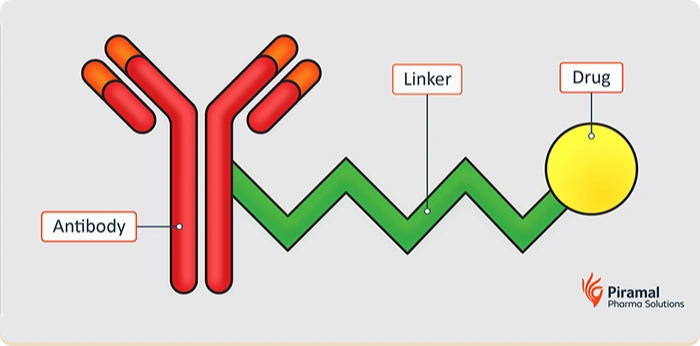
ADC performance depends on more than target selection and payload potency. For many programs, the payload-linker construct becomes the central developability question because it influences stability, release, analytical control, and scalable synthesis. Linker development frequently determines whether a candidate can balance plasma stability, intracellular release, safety, efficacy, and manufacturability. A payload-linker combination that looks promising in early screening may still create problems if it increases aggregation, accelerates clearance, releases payload prematurely, or cannot be produced consistently at scale.
Effective ADC payload linker development begins with target biology and internalization behavior. Cleavable linkers may support bystander effects in heterogeneous tumors, while non-cleavable linkers generally depend on efficient internalization and lysosomal processing. Neither approach is universally better. Selection should be based on target biology, payload chemistry, desired release mechanism, pharmacokinetic profile, and safety objectives.
Payload-linker optimization strategy must also account for hydrophobicity, DAR, aggregation risk, release kinetics, and conjugation chemistry. Microtubule inhibitors such as MMAE are often paired with protease-cleavable peptide linkers. Topoisomerase I payloads may support higher DARs but may require hydrophilic linker development. PBD dimers and other ultra-potent payloads often require particularly stable systems to limit off-target exposure.
Before IND-enabling development, sponsors typically evaluate plasma stability, DAR characterization, aggregation, forced degradation, release kinetics, and in vivo pharmacokinetics. These studies help determine whether ADC payload linker development has produced a construct with credible developability. In North American programs, early CMC planning should be integrated with linker screening rather than treated as a later manufacturing issue.
ChemExpress supports ADC payload linker development through payload-linker synthesis, route scouting, analytical support, scale-up capabilities, and ADC-related CDMO services. For sponsors, the objective is to match biology, chemistry, and manufacturability before committing to a final candidate.
ADC teams evaluating payload-linker strategy can discuss payload class, linker type, conjugation chemistry, stability testing, and scale-up expectations with ChemExpress.